
50,000+ HAPPY CUSTOMERS

Cat And Dog Playing Or Fighting: How Can You Tell?
By: Door Buddy Editors | Published: August 02, 2024

Your cat and dog having the odd tiff might leave you asking 'why does my cat hate my dog?’' In fact, in many instances you'll find that it’s cats fighting a dog and not always the other way around.
In this blog post, we will unpack everything a dog and cat owner needs to know about dogs fighting with cats (and when they're just playing). But most importantly, we'll talk about how the Door Buddy Adjustable Door Prop is the “purrfect” aid for your cat and dog playing or fighting woes. So, if you’re like us and wonder ‘can dogs and cats get along?’, keep on reading.
Can Dogs And Cats Get Along?
When playtime between your dog and cat ends in a yelping dog with a scratched nose and a hissing kitty, things can turn bad pretty quickly! It’s helpful to read the body language of your dog and cat early on so that you can intervene before your pets enter the danger zone. You want to be able to identify the signs of cat aggression towards dogs and vice versa.
So can dogs and cats get along? Yes, we believe they can! However, you need to put in some ground work. Here’s a handy body language reference list to determine if a cat and dog are playing or fighting:
1. Was There An Invitation To Play?
We all know the classic playful sign from our doggies. You know, that courteous bow? Or is your pal more of a pawing to the ground kind of fur buddy?
Either way, this is a clear indication that your dog is in a playful mood. Many cats, on the other hand, roll over onto their backs (or do cat bowing) to start a game. It’s a pretend submission that indicates the intention to play.
Warning: If this first step is skipped and your dog immediately starts a loud, barking chase, these are signs of dog aggressions towards cats! Another warning sign of dogs fighting with cats is when your kitty responds to the invitation with a wagging,
twitching tail. With these actions, there is no mutual agreement, and it probably won’t end well when your cat fights your dog. This is your prompt to step in when you see the battling signs, before your cat slaps the dog.

2. Are They Playing In Turns?
Once the invitation to play is accepted, your buddies will usually take turns at play fighting. Your kitty might swipe, but always with claws retracted, and your doggo will mouth the cat without using teeth. You might notice your cat slapping your dog, but it won't cause any pain.
The pretend fighting might draw some excited noises from your dog, but your cat usually remains silent. They may even take turns at chasing each other, but both stay in the game. This is an excellent indicator that your dream of cats and dogs getting along is coming true!
Warning: If your dog's growl starts to lower in pitch and continue, or if your cat hisses (or makes other aggressive cat sounds), this is a visible sign one or both of them feel uncomfortable or threatened. If teeth or claws come out when your cat smacks your dog, it’s best to separate them immediately to stop your dream from becoming a nightmare.
More subtle signs that your cat is preparing for a real fight or flight include:
-
Ears that turn backward or lie flat
-
Fur standing up
-
Cat arching back when playing
-
Thrashing tail
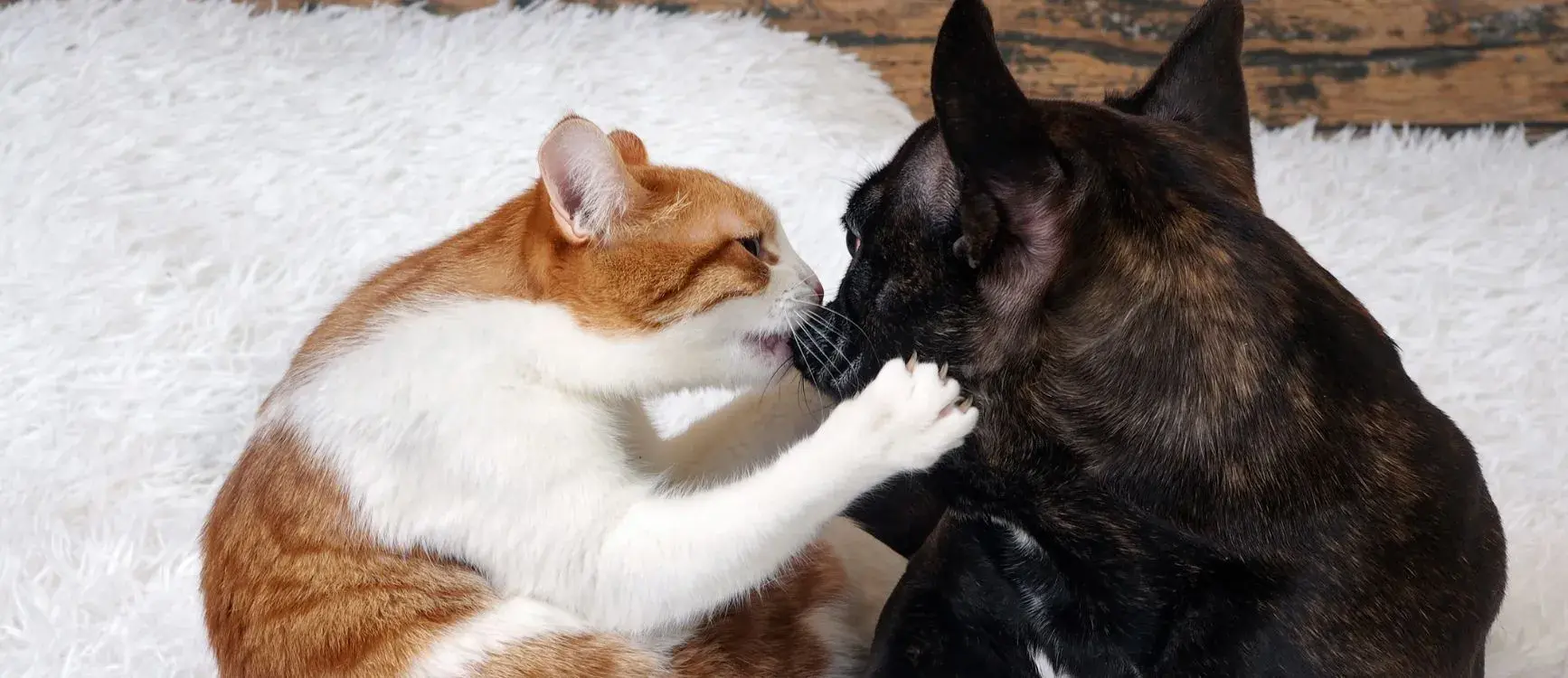
3. Do Cats Hiss When They Play
My cat hissed at my dog - now what? Do cats hiss when they play with dogs?
Usually, any growling or hissing is a sign your cat is growing in discomfort. You might sometimes catch your cat meowing while playing, which is not always a negative sign.
Playing aside, knowing your cats body language can seriously impact how you “pawrent” your pets. The better you know your pets, the safer your home will be - especially when you're introducing a kitten to your dog.
4. How Safe Is The Play Space?
Still wondering about your cat and dog playing or fighting signs and signals? Our best tip: always be in the room with your dog and cat for play fights. The more time you spend with them while they’re in this playful mood, the better you will get at recognizing the signs.
To keep the space safe, we’d advise trying to limit playtime to 5 minutes at a time. This way, your pets won’t get frustrated with each other or become over-excited. You can also try keeping the door slightly open at all times so that your kitty can escape if it gets overwhelming.
How To Stop Dog Aggression Towards Cats
We know how hard it can be to keep the peace between your pets. That is why we suggest fitting a Door Buddy adjustable Door Prop!
The Door Buddy gives your cat an easy exit by propping the door open wide enough for your kitty to pass through but not your dog.
If you're worried about your cat and dog playing and things getting a little rough, then we highly recommend Door Buddy to aid your pet proofing strategy. Having a safe exit keeps “every-pawdy” be happy!
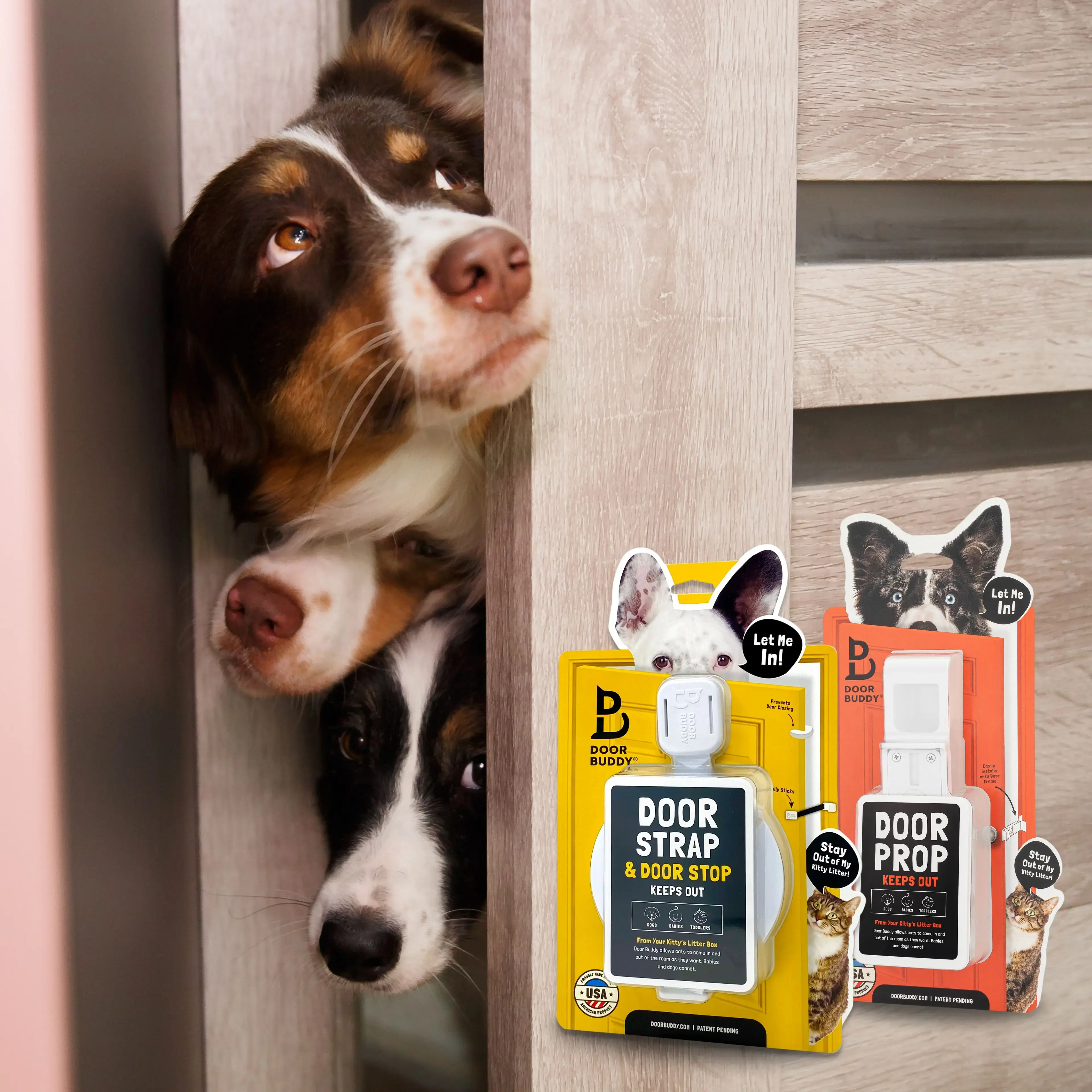
When our pets feel safe, this reduces any animosity that may rear its ugly paws during a rumble. For pet parents, Door Buddy can be a game-changer (not our words, just some of the 25,000+ 5-star reviews that we've received)! If you're wondering how to help my dog and cat get along, this is it!
The best part about Door Buddy is that it gives your cat back their space while keeping the dog out.
Door Buddy installs in seconds without any complications and is much easier to navigate than any baby gate. Our foam door stopper also prevents doors from slamming and keeps those “fur-bulous” tails safe. Keeping the dog out the litter box is also one way to prevent fighting.
Conclusion: Cat And Dog Playing Or Fighting
Dogs playing with cats doesn’t have to be a scary scene. In fact, our furry pals can be best buds when they’ve got the right supervision and safe spaces. You won't need to wonder how to help your dog and cat get along anymore. Understanding the cat and dog playing or fighting signs is a great way for us “fur-parents” to stay in charge and keep the love in our homes!
When in doubt, get involved in the game! Here are some 15-minute games to play with your pet that we know your cat and dog will love. If you're a parent as well as a “pawrent”, you might also want to check out this blog on how to keep baby out the litter box.
FIND THE BEST DOOR BUDDY FOR YOUR HOME
Tired of playing door referee? Door Buddy gives you an easy way to control access in your home, from curious cats to energetic dogs to busy little humans. Find the right fit below and take back control of your space.
WHAT’S ON THE BLOG
Tips, tricks, and stories for happier, healthier cats and homes. Explore our latest articles below.

Subscribe to be the first to hear about our exclusive offers and latest arrivals.
INFORMATION
COMPANY
GET IN TOUCH
Copyright © 2026 | All rights reserved @Door Buddy

Your Privacy Rights
At The Door Buddy, your privacy matters. You have full control over how your personal data is collected and used.
Opt out of sale & sharing
You have the right to opt out of the sale or sharing of your personal information for targeted advertising.
Right to correct & delete
You may request corrections or deletion of inaccurate personal information we hold about you.
Do Not Sell / Targeted Advertising
We may share browsing data with advertising partners. Toggle off to opt out across all our ad platforms.
Targeted advertising Active
Allows personalised ads based on your activity on The Door Buddy store and across the web.
Meta / Facebook Pixel
Used for retargeting campaigns and conversion tracking via Meta Ads Manager.
Google Ads & remarketing
Enables conversion tracking and personalised ads across Google's network.
Sensitive Personal Information
We do not currently store sensitive personal data such as health or financial information.
Precise location
Used to estimate shipping times and show local delivery options.
Browsing & purchase history
Used to personalise your experience including product recommendations.
Cookie Preferences
Manage which cookies are stored on your device.
Strictly necessary Always on
Required for checkout, cart, login, and security.
Analytics & performance
Help us understand how visitors navigate the store (e.g. Google Analytics).
Marketing & advertising
Used to deliver relevant ads and measure campaign performance.
Functional
Enhance your experience with features like live chat and wishlists.
Access, Correct & Delete Your Data
Submit a request below — we aim to respond within 30 days as required by law.
Request a data report
Receive a full summary of personal data we hold about you.
Correct my data
Ask us to update or fix inaccurate personal information we hold.
Delete my account & data
Request permanent deletion, subject to legal retention requirements.