
50,000+ HAPPY CUSTOMERS

Keep Your Small Dog Out The Litterbox
By: Door Buddy Editors | Published: January 11, 2026
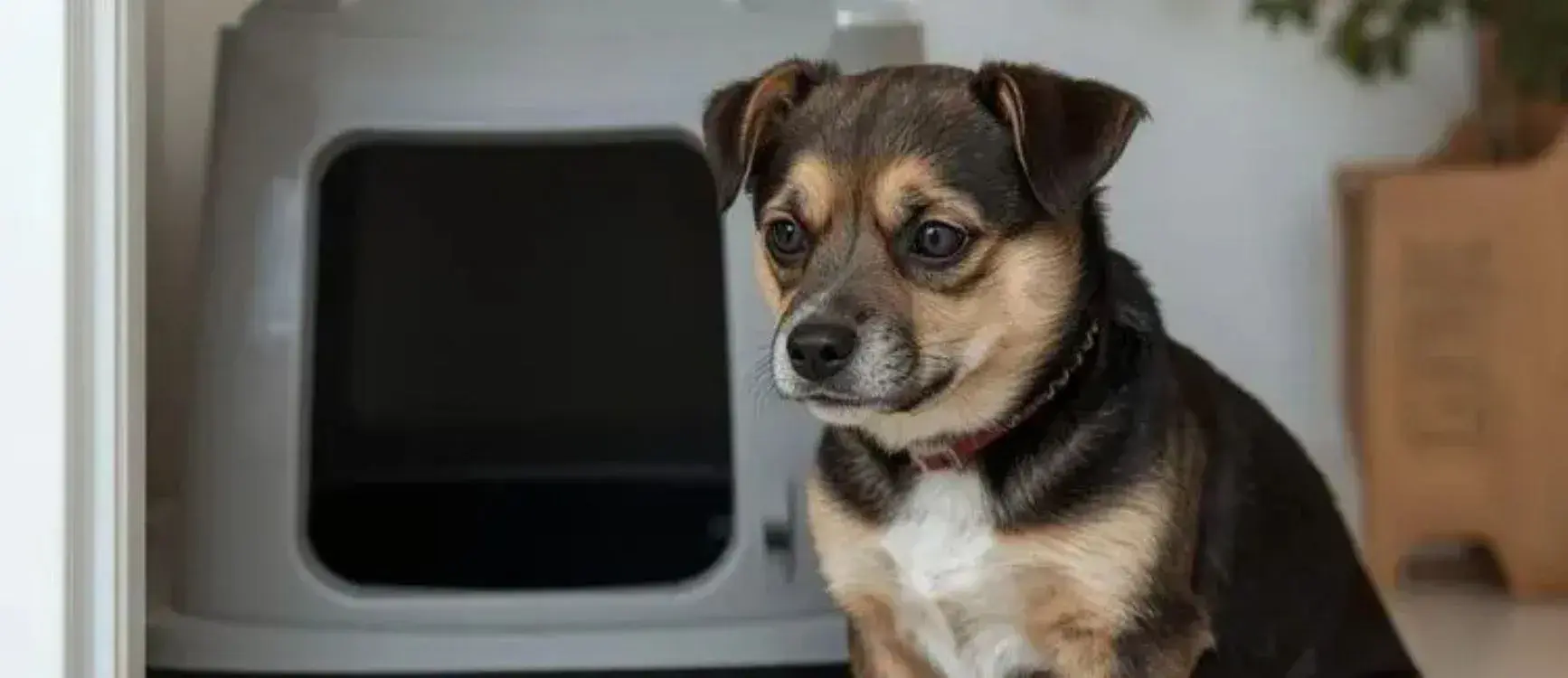
Why Do Dogs Like Cat Poop?
Your doggo seems to absolutely love his newfound snacks, so you ask yourself, “Why the barking heck does my dog love chowing on my cat’s poop so much?” To learn why, we’ve covered this topic in a previous article.
For the Spark Notes version, dogs have no idea that what they’re eating are the remains of their feline friend! All he knows is that it smells “a-meow-zing” that he can’t resist taking a big munch of it all. Despite dogs being natural scavengers, this not-so-cute habit may be the result of a nutrient deficiency.
Cats' remains can contain unprocessed nutrients like protein, and to your dog’s determined nose, that smell signals a tasty potential treat.
The danger in your doggo consuming these “tasty” treats is that they may contain parasites and disease organisms that present significant health risks. Read about toxoplasmosis here.
For the sake of your dog’s health, it’s extremely important that you take the necessary precautions to keep your dog out of the litterbox.
Let’s run through a few things that you can do to keep your small dog out of the litterbox.
Quick Comparison To Help You Decide
If you’re trying to figure out how to keep a dog out of litter box areas, here’s a simple breakdown:
-
Training: effective long-term, slow results
-
Dog proof cat boxes: reliable if your cat accepts them
-
Litter box furniture: hides the box and blocks access
-
Self-cleaning litter box: reduces temptation but doesn’t block access
-
Door-based solutions: consistent and low effort

7 Ways To Keep Your Dog Out Of The Litter Box
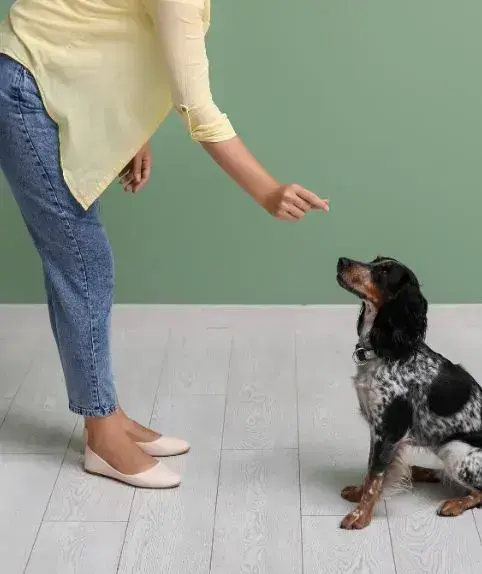
1. Train Your Dog
You’re lucky if you’ve managed to catch the “pawblem” of your puppy snacking in the cat’s litter box early in their development. The absolute best long-term solution is to train your puppy.
That said, finding the time and patience for training can be hard. Luckily, there’s a wealth of easy-to-follow dog training content available online, including step-by-step YouTube videos.
Training tips are plentiful and often free, making them a truly “pawsome” way to learn best practices for guiding your puppy or young doggo.
Best for:
– Puppies
– Dogs that already respond to commands
Not ideal if:
– Your dog ignores cues when unsupervised
– You need a fast fix
2. Elevate The Litter Box
So your little buddy has created a habit of rummaging around the litter box, and you don’t have the time to focus on training right now. What do you do?
Get creative by elevating the litter box off the floor. The key is placing it high enough that your dog can’t reach it, while still keeping it comfortable and accessible for your cat.
For example, a cat climbing post with space for a litter tray can work well. This setup lets your cat access their litter box easily, without your little doggo being able to sneak in.
Best for:
– Agile cats
– Very small dogs
Not ideal if:
– Senior or arthritic cats
– Dogs that can climb furniture
3. Invest in a Dogproof Litterbox
A dog-proof litter box can be a great solution for homes with both cats and dogs. These boxes often feature covered or top-entry designs, sometimes with a swinging door, allowing your cat to slip in while keeping your dog out.
Dog-proof litter boxes are widely available and come in a variety of shapes and sizes, so you can choose one that fits your space, and your cat’s comfort level.
Best for:
– Persistent scavengers
– Homes with limited space
Not ideal if:
– Cats that dislike enclosed spaces
– Cats with mobility issues
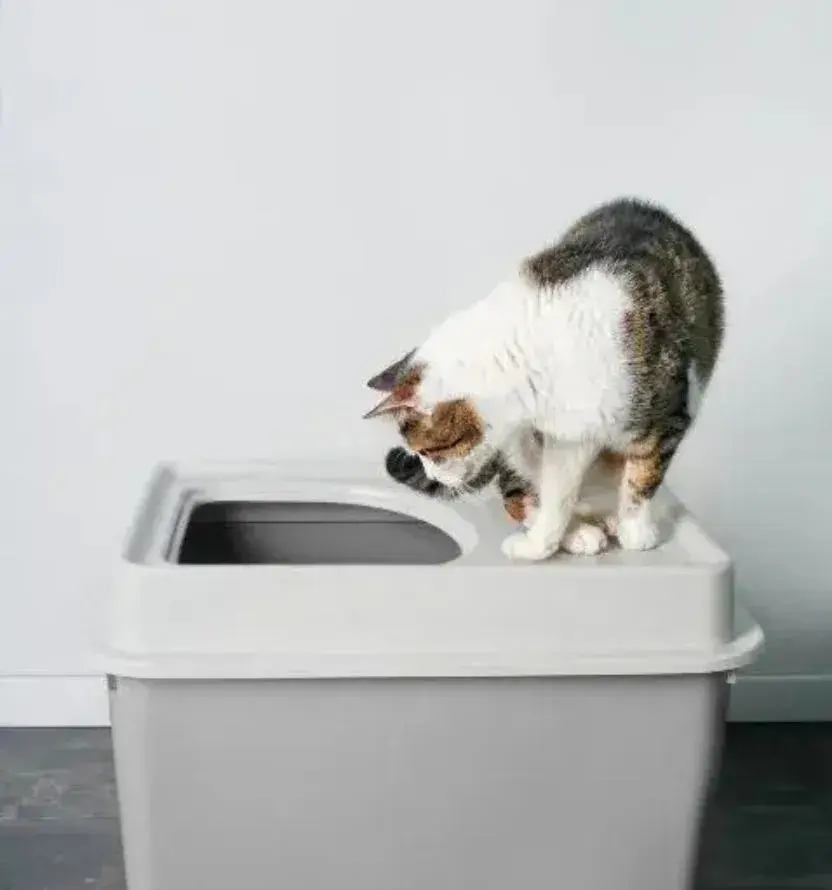
4. Clean Up ASAP
This tip works best as a short-term fix, not a long-term solution. Think of it as a temporary strategy while you set up something more reliable.
If you’re home when your kitty has their “me time,” clean the litter box as soon as possible. The less time waste is left sitting out, the less opportunity your dog has to sneak a snack.
That said, this approach isn’t always realistic. It’s hard to be around every single time your cat uses the litter box. Who’s got time for that, right?
Best for:
– Short-term management
– Work-from-home households
Not ideal if:
– You’re away most of the day
– You want a hands-off fix
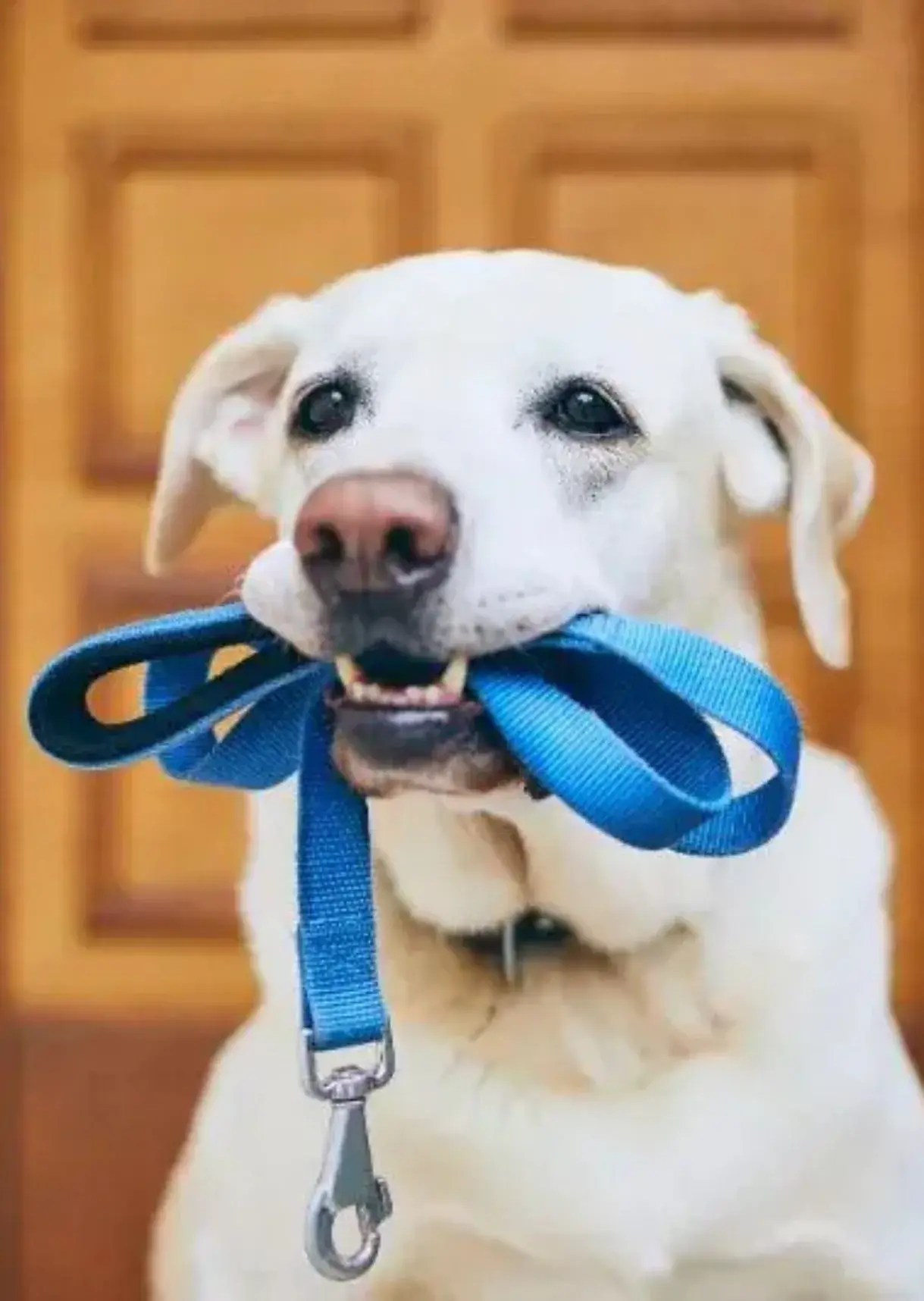
5. Keep Your Dog Occupied
Have you ever gotten up from the couch to grab a snack, only to find yourself back in the kitchen five minutes later looking for something else to munch on? We call this bored snacking — and we’re all guilty of it.
Guess what? Our furry friends aren’t so different. Dogs get bored too, and boredom often leads to mischief. For some pups, that mischief includes sneaking into the litter box.
One of the easiest ways to prevent this is to keep your dog mentally and physically active.
Try:
-
Visiting the local dog park
-
Playing fetch in the yard
-
Taking your dog for a swim
-
Going on regular evening walks
When your dog has a healthy outlet for their energy, they’re more relaxed at home and far less likely to go looking for trouble.
Best for:
– High-energy dogs
– Boredom-driven behavior
Not ideal if:
– The habit happens overnight
– Your dog is already well-exercised
6. Keep Your Dog Well-Nourished
You might be surprised how similar our doggos are to us. When we don’t eat well, we crave snacks, reach for junk food, and never quite feel satisfied.
The same goes for dogs. When they aren’t getting the nutrients they need, they may start scavenging, eating anything that smells like food, including your cat’s poop.
That’s why keeping your dog on a balanced, high-quality diet is so important. A well-nourished dog is less likely to crave extra “snacks” and go searching in the litter box. Instead, they’re getting the nutrients they need to feel full, satisfied, and healthy.
Best for:
– Food-motivated dogs
– Dogs on low-quality diets
Not ideal if:
– The behavior is purely habit-based
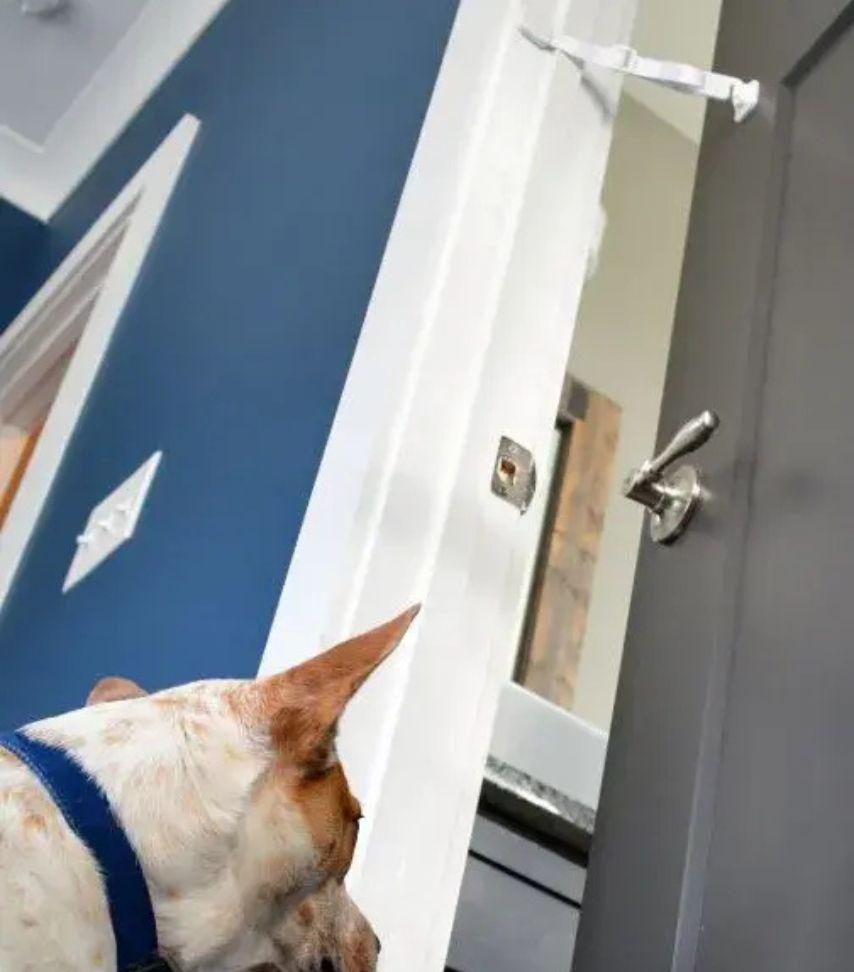
7. When in Doubt, Use Door Buddy
We know, Door Buddy works best for doggos that are the same size or bigger than your feline friend. However, did you know that cats can be surprisingly liquid when they want to be?
Have you ever found your cat in a weirdly small place and thought, "how?!"? That's because, when properly motivated, they can fit into just about anything!
For Door Buddy, we recommend comparing your doggo’s head to your cat’s shoulders, usually the widest part of your cat’s body, and adjusting the strap accordingly. This helps ensure your cat can pass comfortably while keeping your dog out.
We hope these tips for keeping a small dog out of the litter box come in handy. By giving your dog the right boundaries, you’ll help them stay healthy, happy, and well-behaved, and keep your cat’s space peaceful and stress-free. After all, those “cat snacks” belong in the litter box, not in your doggo’s tummy!
Frequently Asked Questions
Symptoms If Your Dog Has Eaten Cat Poop May Include
-
Vomiting
-
Diarrhea
-
Lethargy
-
Loss of appetite
If symptoms persist, contact your vet.
Conclusion: Keep Your Small Dog Out The Litterbox
Keeping your small dog out of the litter box isn’t about finding a single “perfect” fix, it’s about choosing the solution that works best for your pets, your home, and your routine.
If your dog is still learning, training paired with smart management can go a long way. If commands aren’t sticking, physical barriers and access control tend to work faster and more consistently. And if your cat is older or less agile, cat-friendly setups should always come first.
Most importantly, don’t beat yourself up. This is a common issue in multi-pet homes, and solving it is less about discipline and more about environment. With the right setup in place, your dog stays healthier, your cat keeps their safe space, and you get a little more peace of mind, no more litter box patrol required.
FIND THE BEST DOOR BUDDY FOR YOUR HOME
Tired of playing door referee? Door Buddy gives you an easy way to control access in your home, from curious cats to energetic dogs to busy little humans. Find the right fit below and take back control of your space.
WHAT’S ON THE BLOG
Tips, tricks, and stories for happier, healthier cats and homes. Explore our latest articles below.

Subscribe to be the first to hear about our exclusive offers and latest arrivals.
INFORMATION
COMPANY
GET IN TOUCH
Copyright © 2026 | All rights reserved @Door Buddy

Your Privacy Rights
At The Door Buddy, your privacy matters. You have full control over how your personal data is collected and used.
Opt out of sale & sharing
You have the right to opt out of the sale or sharing of your personal information for targeted advertising.
Right to correct & delete
You may request corrections or deletion of inaccurate personal information we hold about you.
Do Not Sell / Targeted Advertising
We may share browsing data with advertising partners. Toggle off to opt out across all our ad platforms.
Targeted advertising Active
Allows personalised ads based on your activity on The Door Buddy store and across the web.
Meta / Facebook Pixel
Used for retargeting campaigns and conversion tracking via Meta Ads Manager.
Google Ads & remarketing
Enables conversion tracking and personalised ads across Google's network.
Sensitive Personal Information
We do not currently store sensitive personal data such as health or financial information.
Precise location
Used to estimate shipping times and show local delivery options.
Browsing & purchase history
Used to personalise your experience including product recommendations.
Cookie Preferences
Manage which cookies are stored on your device.
Strictly necessary Always on
Required for checkout, cart, login, and security.
Analytics & performance
Help us understand how visitors navigate the store (e.g. Google Analytics).
Marketing & advertising
Used to deliver relevant ads and measure campaign performance.
Functional
Enhance your experience with features like live chat and wishlists.
Access, Correct & Delete Your Data
Submit a request below — we aim to respond within 30 days as required by law.
Request a data report
Receive a full summary of personal data we hold about you.
Correct my data
Ask us to update or fix inaccurate personal information we hold.
Delete my account & data
Request permanent deletion, subject to legal retention requirements.