
50,000+ HAPPY CUSTOMERS

Littermate Syndrome: What It Is, Signs, And How To Prevent Or Fix It
By: Door Buddy Editors | Published: 22 January 2026

What Is Littermate Syndrome?
Littermate syndrome is a term used to describe a pattern of behavioral challenges that can develop when two puppies or kittens from the same littermate group (or same-age siblings) are raised together without enough individual training and bonding.
In these cases, the littermate bond becomes stronger than the human-animal bond, which can lead to:
-
Over-dependence on each other
-
Anxiety when separated
-
Poor focus during training
-
Fearfulness or aggression
Is Littermate Syndrome A Myth Or A Real Problem?
You’ll often see debates claiming:
-
“Littermate syndrome is a myth.”
-
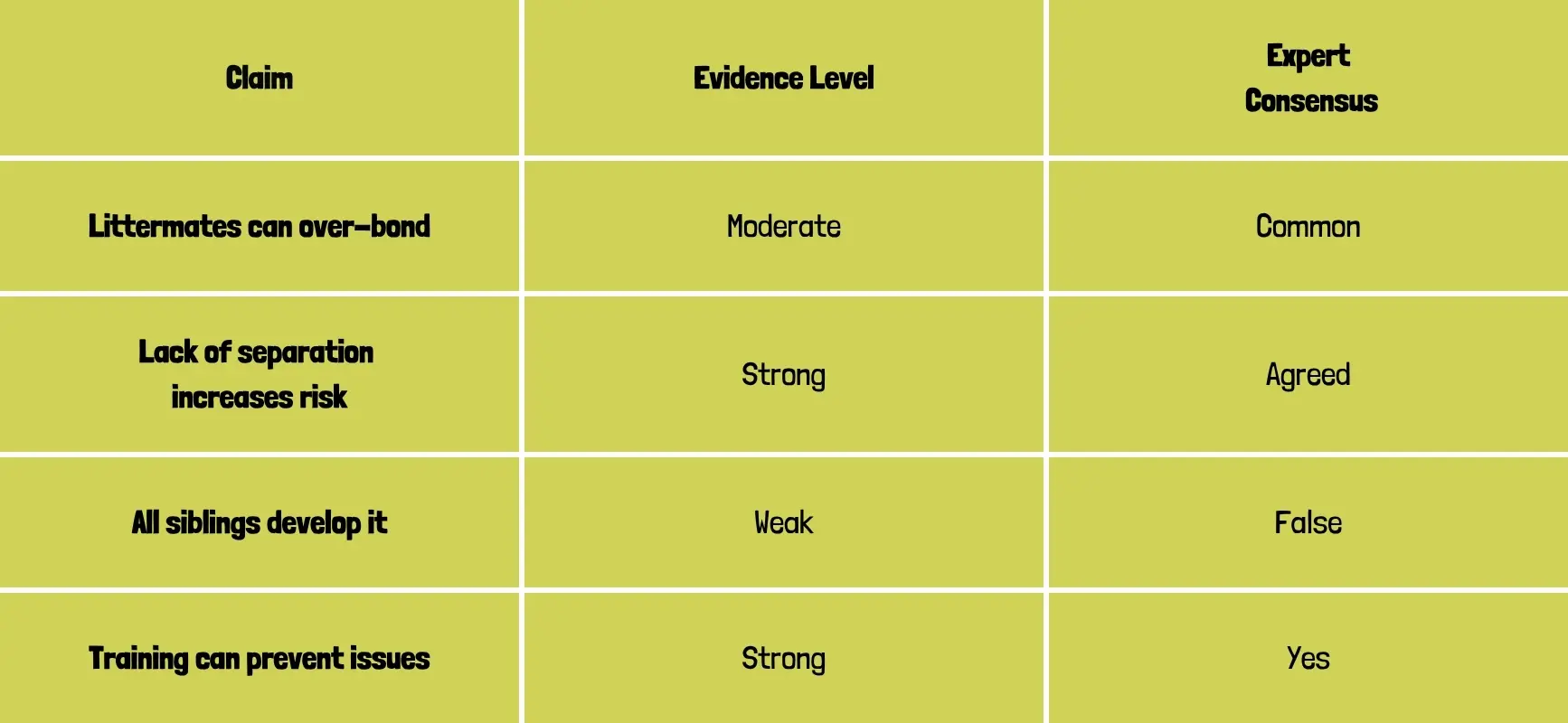
“It happens to all siblings.”
The reality? Littermate syndrome is real, but it’s not guaranteed.
Experts agree: littermate syndrome isn’t an official diagnosis, but the behavior is real and commonly seen in siblings raised together.
Conclusion: Littermate syndrome is real, but environment and training matter more than genetics.
How Common Is Littermate Syndrome?

There’s no single statistic, but behavior professionals agree:
Littermate syndrome is common enough to be a regular concern
It’s more likely when siblings:
-
Are always trained together
-
Share crates long-term
-
Don’t receive individual attention
So yes - littermate syndrome is common, but it’s also highly preventable.
Signs Of Littermate Syndrome
Common signs of littermate syndrome include:
-
Extreme distress when separated
-
Poor engagement with humans
-
One sibling dominating decisions
-
Fear of new environments
-
Aggression between siblings
Age-Based Behavior Changes:
-
8-12 weeks: Clinginess, low independence
-
3-6 months: Slow training progress
-
Adolescence: Rivalry, anxiety, aggression
-
Adulthood: Long-term behavioral issues if untreated
What Age Does Littermate Syndrome Start?
Early signs can begin as young as 8-10 weeks, but littermate syndrome most often becomes noticeable during:
-
Increased independence stages
-
Puppy adolescence
Early intervention dramatically improves outcomes.

Littermate Syndrome In Dogs Vs Cats

Littermate Syndrome Dogs
Dogs are more prone because they rely heavily on:
-
Social learning
-
Human leadership
-
Structured training
This is why dog training for littermate syndrome is so important.
Littermate Syndrome Cats
Littermate syndrome in cats does occur, but:
-
It’s generally milder
-
Often appears as co-dependence or separation stress
-
Aggression and developmental issues are less common
How To Prevent Littermate Syndrome
Prevention is the most effective strategy.
Proven Ways to Prevent Littermate Syndrome
-
Separate training sessions
-
Individual feeding routines
-
Solo walks or enrichment time
-
Separate crates, especially overnight
-
One-on-one bonding with humans
Dog Training For Littermate Syndrome
Effective dog training for littermate syndrome focuses on:
1. Separate Training
Each dog learns independently before training together.
2. Individual Bonding
Each dog needs their own relationship with their handler.
3. Controlled Socialization
New environments, people, and dogs are introduced separately first.

How To Fix Littermate Syndrome
Yes, littermate syndrome can be cured or significantly improved in many cases.
What Helps:
-
Structured separation schedules
-
Confidence-building exercises
-
Professional trainer or behaviorist support
Can littermate syndrome be cured?
There’s no instant fix, but with consistency, many dogs improve dramatically.
Dog Sibling Syndrome Vs Littermate Syndrome
Dog sibling syndrome refers to similar behavioral issues in dogs of the same age who aren’t true littermates.
Cause = shared environment, not shared genetics.
Myth Vs Fact
Myth: Littermate syndrome affects all sibling dogs
Fact: It’s more likely when puppies lack individual training and bonding
FAQ
Conclusion: Littermate Syndrome
Littermate syndrome isn’t something to fear, and it’s not something to dismiss. Whether you’re dealing with littermate syndrome dogs, littermate syndrome cats, or concerns about dog sibling syndrome, the outcome depends largely on training, structure, and independence.
The key isn’t avoiding a littermate, it’s raising them correctly.
FIND THE BEST DOOR BUDDY FOR YOUR HOME
Tired of playing door referee? Door Buddy gives you an easy way to control access in your home, from curious cats to energetic dogs to busy little humans. Find the right fit below and take back control of your space.
WHAT’S ON THE BLOG
Tips, tricks, and stories for happier, healthier cats and homes. Explore our latest articles below.

Subscribe to be the first to hear about our exclusive offers and latest arrivals.
INFORMATION
COMPANY
GET IN TOUCH
Copyright © 2026 | All rights reserved @Door Buddy

Your Privacy Rights
At The Door Buddy, your privacy matters. You have full control over how your personal data is collected and used.
Opt out of sale & sharing
You have the right to opt out of the sale or sharing of your personal information for targeted advertising.
Right to correct & delete
You may request corrections or deletion of inaccurate personal information we hold about you.
Do Not Sell / Targeted Advertising
We may share browsing data with advertising partners. Toggle off to opt out across all our ad platforms.
Targeted advertising Active
Allows personalised ads based on your activity on The Door Buddy store and across the web.
Meta / Facebook Pixel
Used for retargeting campaigns and conversion tracking via Meta Ads Manager.
Google Ads & remarketing
Enables conversion tracking and personalised ads across Google's network.
Sensitive Personal Information
We do not currently store sensitive personal data such as health or financial information.
Precise location
Used to estimate shipping times and show local delivery options.
Browsing & purchase history
Used to personalise your experience including product recommendations.
Cookie Preferences
Manage which cookies are stored on your device.
Strictly necessary Always on
Required for checkout, cart, login, and security.
Analytics & performance
Help us understand how visitors navigate the store (e.g. Google Analytics).
Marketing & advertising
Used to deliver relevant ads and measure campaign performance.
Functional
Enhance your experience with features like live chat and wishlists.
Access, Correct & Delete Your Data
Submit a request below — we aim to respond within 30 days as required by law.
Request a data report
Receive a full summary of personal data we hold about you.
Correct my data
Ask us to update or fix inaccurate personal information we hold.
Delete my account & data
Request permanent deletion, subject to legal retention requirements.