
50,000+ HAPPY CUSTOMERS

How to Keep Your Toddler Out of the Cat Litter Box (And What Actually Works)
By: Door Buddy Editors | Published: March 23, 2026
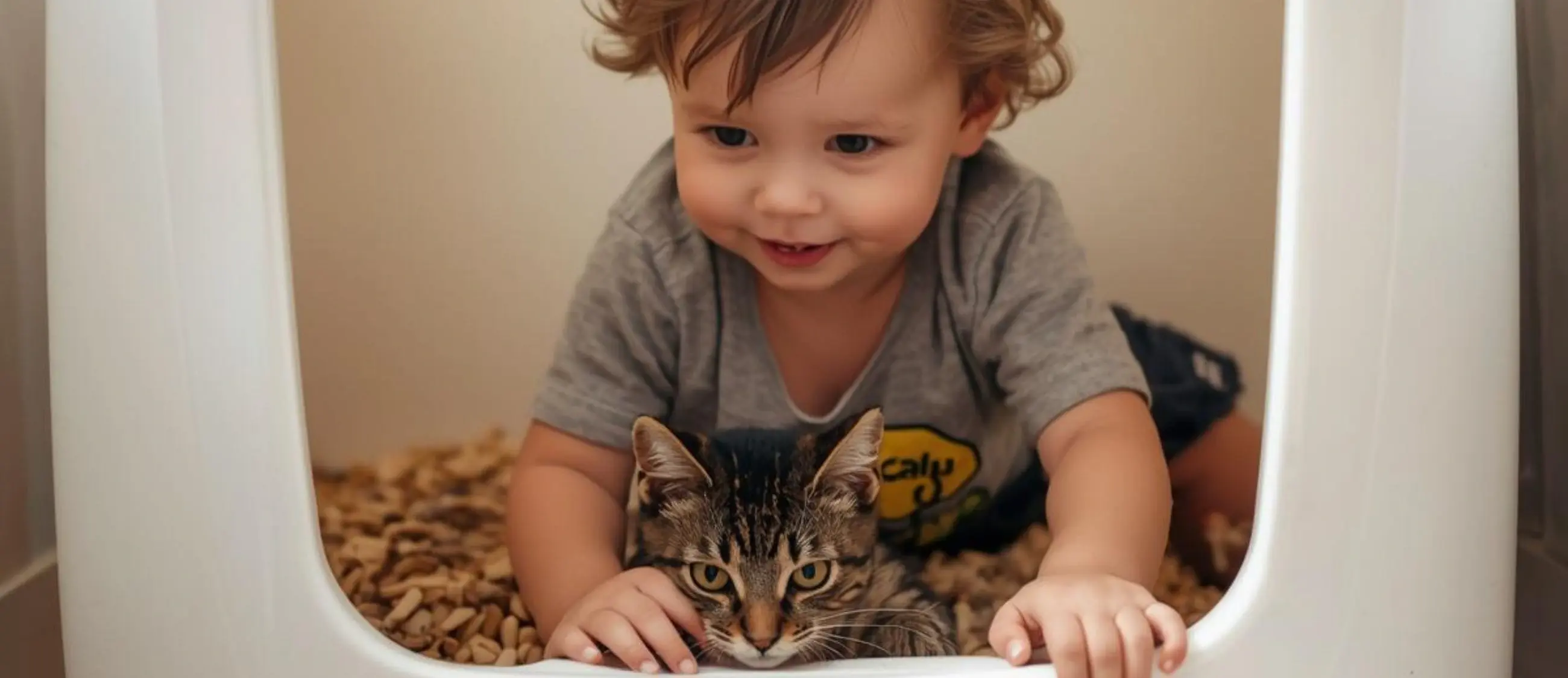
Why Toddlers Are Obsessed With the Litter Box
Before we jump into solutions, here’s the psychology (this is the part most blogs skip )
1. It feels like a sensory activity
A litterbox has a sand-like texture, which makes it irresistible. Toddlers are wired for sensory play, touching, scooping, and exploring.
2. “Forbidden” spaces are more exciting
The more you try to block it, the more interesting it becomes. This is why basic childproofing sometimes backfires.
3. Repetition is learning
Even if you’ve said “no” 20 times, they’ll go back. Not to test you, but to understand the world.
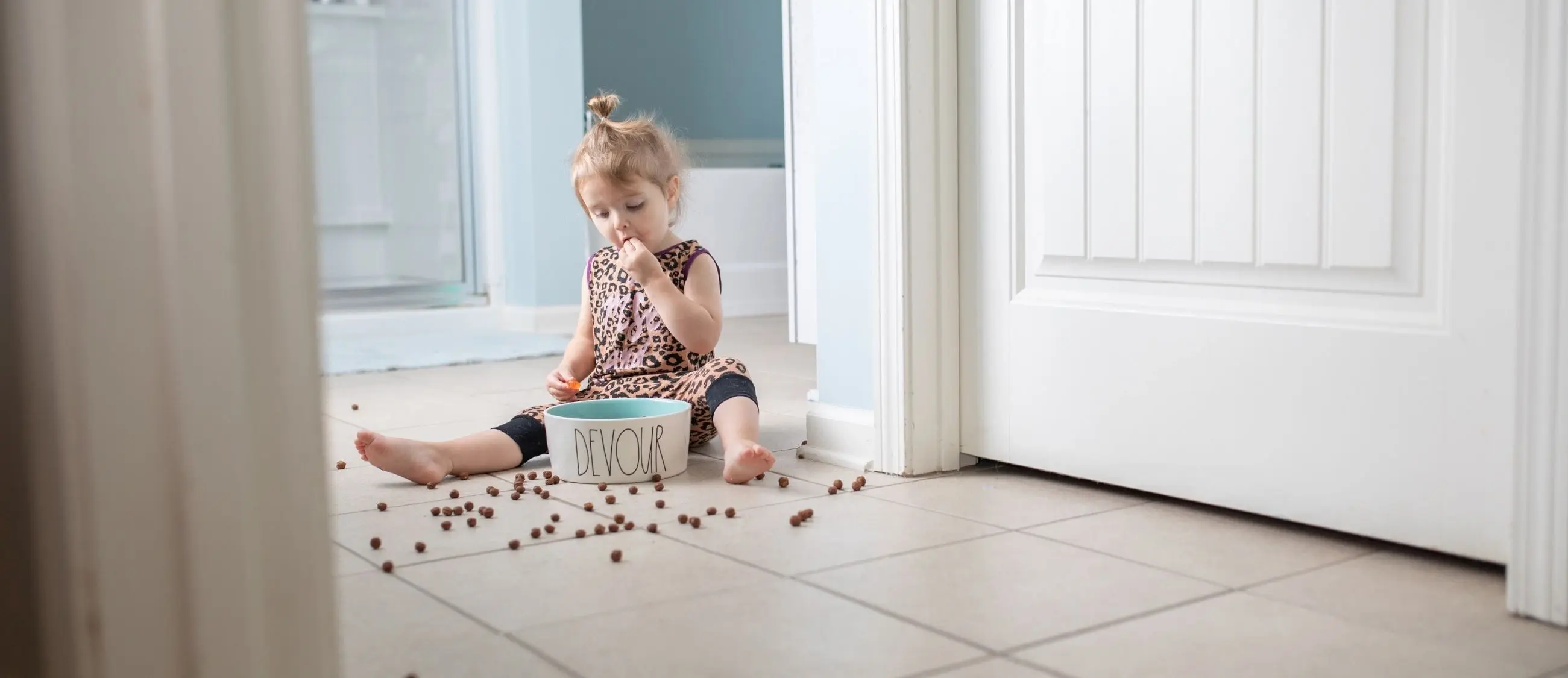
Why Your Toddler Keeps Going Back (Even After You Say No)
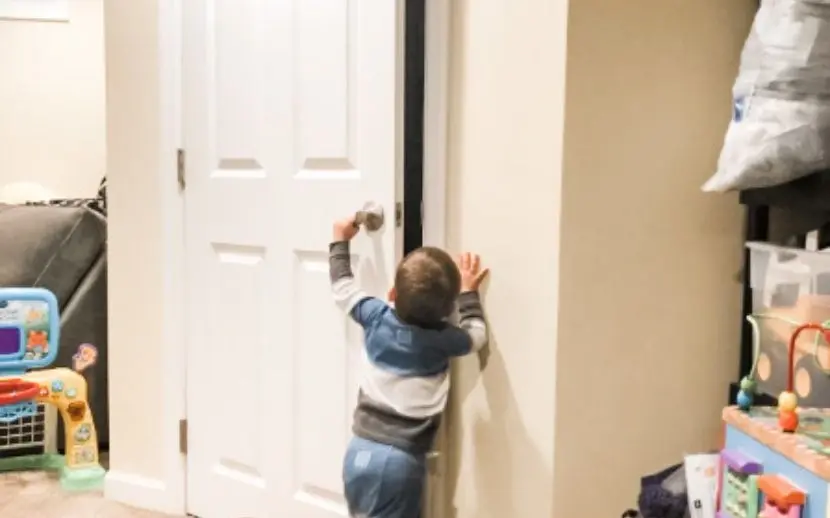
Here’s the key shift:
Toddlers don’t learn from rules; they learn from interaction.
So if your strategy is:
-
Saying “no”
-
Moving them away
-
Repeating it daily…
It won’t stick.
You need to change the environment, not just the behavior.
The Real Risks (Without the Panic)
A cat litter box isn’t dangerous in a dramatic way, but it’s definitely not toddler-friendly.
Main concerns:
-
Germs and bacteria
-
Eating or touching litter box and litter
-
Hygiene issues
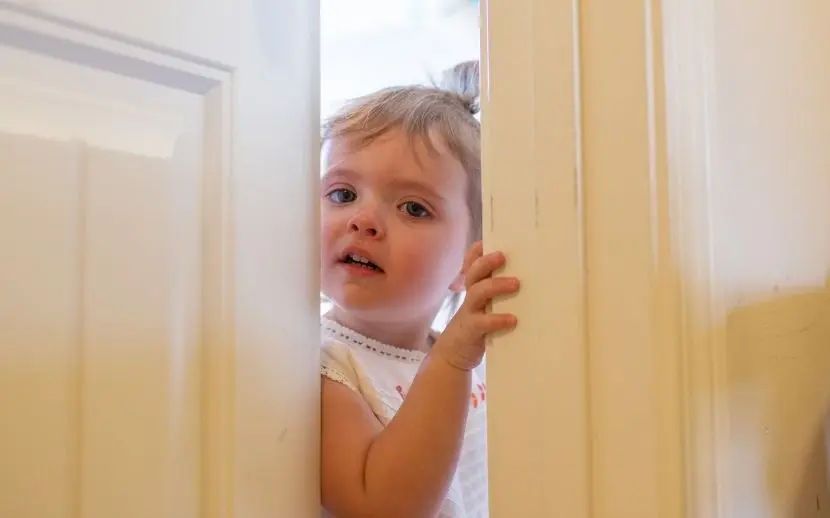
What Parents Are Trying (And Why It Doesn’t Always Work)
Most parents try:
-
A baby gate (sometimes even a baby gate for stairs)
-
Closing doors
-
Moving the litter box
-
Constant supervision
-
Saying “no” on repeat
And then…
The toddler still finds a way in.
Why? Because these solutions often miss one or two key layers.
The 3-Layer Toddler-Proof System
Instead of random fixes, here’s a system that actually works:
1. Block Access (Your First Line of Defence)
This is your foundation for babyproof doors and restricted areas.
Options to try:
-
A baby gate to restrict access
-
Childproofing door locks or a door safety stopper
-
Keeping doors slightly ajar with a Door Buddy Door Strap
-
Training yourself to consistently lock doors when needed
Important: Some toddlers (and even cats) will outsmart weak setups, so choose durable, secure options.
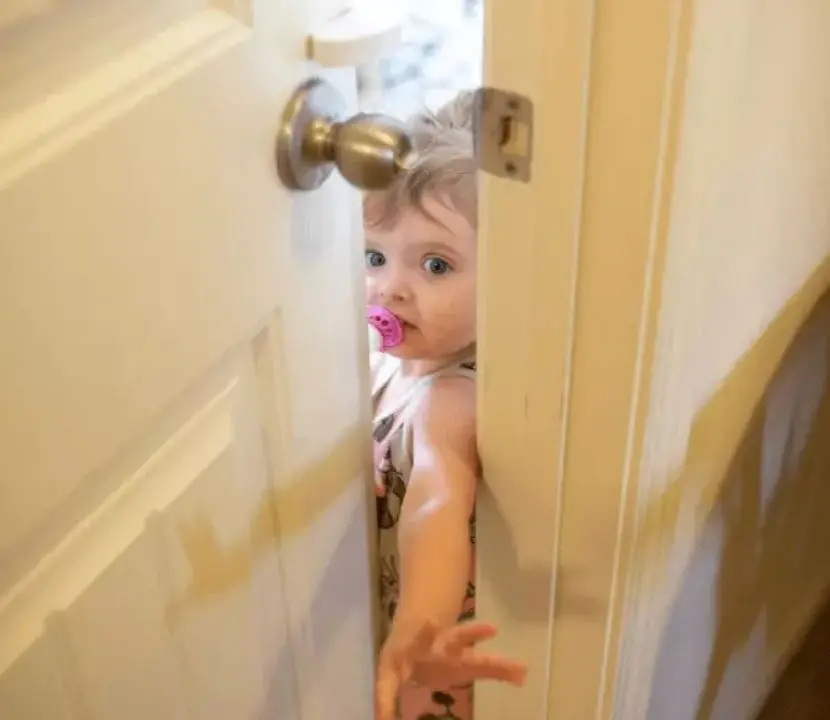
2. Reduce Visibility (Out of Sight = Out of Mind)
If your toddler can see the litter boxes, they’ll want to explore.
Smart placement ideas:
-
Hide it behind furniture
-
Use a litter box enclosure (looks like a cabinet)
-
Place it in a laundry room or bathroom
-
Choose a low-traffic, tucked-away spot
If you’re wondering where to keep a cat litter box, the answer is:
Somewhere your cat can access easily, but your toddler can’t see or reach easily.
3. Redirect the Behavior (The Step Most People Skip)
This is the game-changer. If you remove the litter box without replacing the experience, your toddler will keep searching for it.
Try:
-
A sensory bin (rice, sand, oats)
-
Water play activities
-
Safe “digging” toys
This satisfies the same curiosity as a cat litter box, but in a safe, child-safe way.
The Safest Setup for Small Spaces
If you live in an apartment or smaller home, this gets trickier, but not impossible.
Here’s what works:
-
Use vertical or hidden spaces (cupboards, corners)
-
Install childproofing door locks that allow cat access
-
Use Door Buddy Door Strap
-
Use compact or enclosed best cat litter boxes
-
Add a best cat litter box mat to reduce mess outside the area
In smaller homes, layout and smart childproofing matter more than anything.
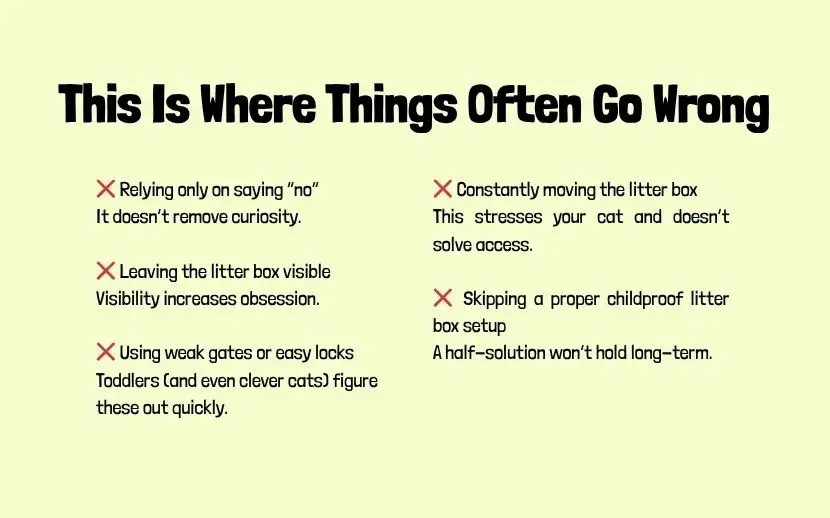
Mistakes Parents Make When Childproofing the Litter Box
Real-Life Solutions That Actually Work
From real parents dealing with this daily:
✔ A secure baby gate + hidden litter area
✔ A furniture-style litter box enclosure
✔ A door with a door safety stopper or latch
✔ A consistent routine of closing or securing access
✔ A dedicated toddler sensory play station
The common thread?
A mix of blocking, hiding, and redirecting.
Quick Checklist: Childproof Your Litter Box Setup
Use this to fix your setup fast:
-
Do I have a secure barrier (gate, lock, or door)?
-
Can my toddler easily see the cat litter box?
-
Have I created a childsafe alternative activity?
-
Am I consistent with babyproof doors?
-
Is the setup working for both my toddler and my cat?
Conclusion: How to keep the toddler out of the litter box
Your toddler isn’t being difficult, they’re being curious, sensory-driven, and totally normal.
Once you stop relying on “no” and start using a system, childproofing, smart placement, and redirection, keeping your toddler out of the litter box gets much easier.
And yes… you can have a clean home, a happy cat, and a toddler who finally loses interest in the litter box
Other articles you may enjoy:
FIND THE BEST DOOR BUDDY FOR YOUR HOME
Tired of playing door referee? Door Buddy gives you an easy way to control access in your home, from curious cats to energetic dogs to busy little humans. Find the right fit below and take back control of your space.
WHAT’S ON THE BLOG
Tips, tricks, and stories for happier, healthier cats and homes. Explore our latest articles below.

Subscribe to be the first to hear about our exclusive offers and latest arrivals.
INFORMATION
COMPANY
GET IN TOUCH
Copyright © 2026 | All rights reserved @Door Buddy

Your Privacy Rights
At The Door Buddy, your privacy matters. You have full control over how your personal data is collected and used.
Opt out of sale & sharing
You have the right to opt out of the sale or sharing of your personal information for targeted advertising.
Right to correct & delete
You may request corrections or deletion of inaccurate personal information we hold about you.
Do Not Sell / Targeted Advertising
We may share browsing data with advertising partners. Toggle off to opt out across all our ad platforms.
Targeted advertising Active
Allows personalised ads based on your activity on The Door Buddy store and across the web.
Meta / Facebook Pixel
Used for retargeting campaigns and conversion tracking via Meta Ads Manager.
Google Ads & remarketing
Enables conversion tracking and personalised ads across Google's network.
Sensitive Personal Information
We do not currently store sensitive personal data such as health or financial information.
Precise location
Used to estimate shipping times and show local delivery options.
Browsing & purchase history
Used to personalise your experience including product recommendations.
Cookie Preferences
Manage which cookies are stored on your device.
Strictly necessary Always on
Required for checkout, cart, login, and security.
Analytics & performance
Help us understand how visitors navigate the store (e.g. Google Analytics).
Marketing & advertising
Used to deliver relevant ads and measure campaign performance.
Functional
Enhance your experience with features like live chat and wishlists.
Access, Correct & Delete Your Data
Submit a request below — we aim to respond within 30 days as required by law.
Request a data report
Receive a full summary of personal data we hold about you.
Correct my data
Ask us to update or fix inaccurate personal information we hold.
Delete my account & data
Request permanent deletion, subject to legal retention requirements.