
50,000+ HAPPY CUSTOMERS

How To Keep Dog Out Of Litter Box
By: Door Buddy Editors | Published: October 16, 2026
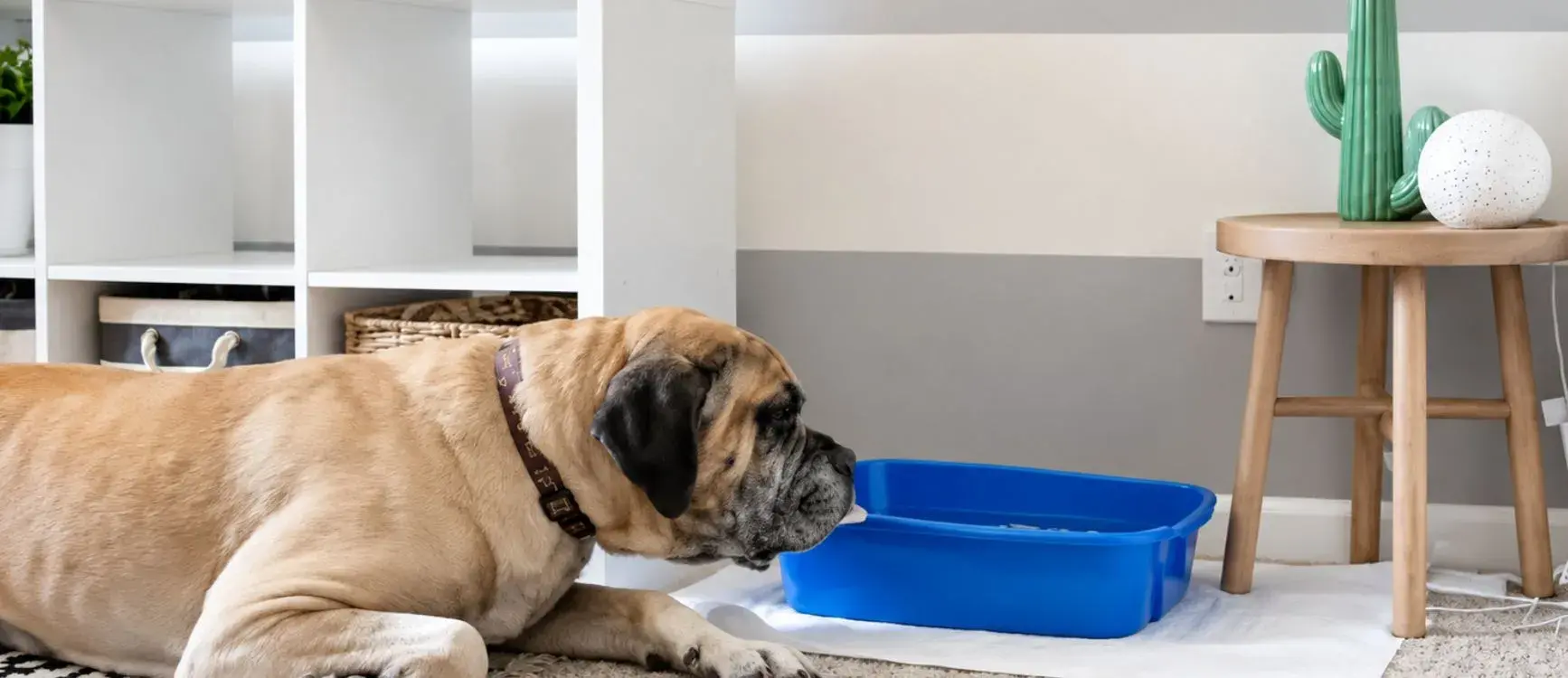
The Quick Answer: Is There A Dog-Proof Litter Box?
Not completely. Covered and top-entry litter boxes make it harder, but small dogs can still get their heads in, determined dogs find a way, and some cats refuse to use them. What works for most homes is a mix: keep the litter box clean, give your dog something better to do, and control access to the room the litter box is in, so your cat can get in and your dog can't easily follow.
Why Is Your Dog Suddenly Interested In The Litter Box?
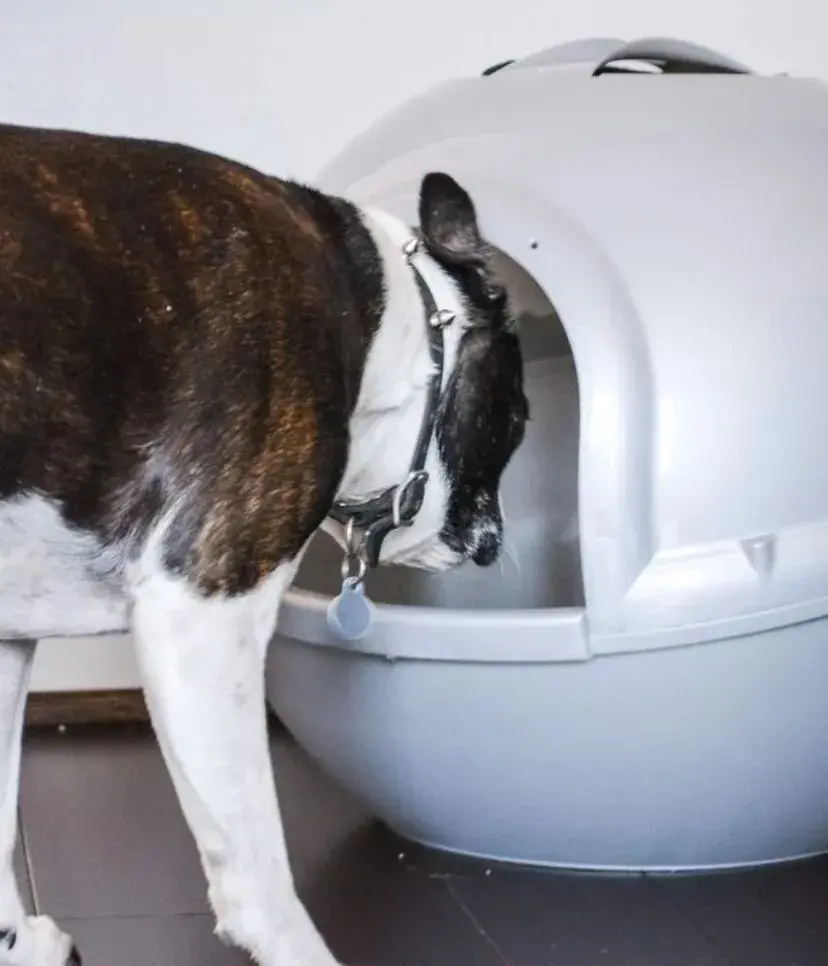
If your dog ignored the litter box for months and now can't stay away, something has usually changed. Knowing what changed helps you pick the right fix.
-
A new dog, or a new cat. A dog who just arrived, adopted or brought home as a puppy, often finds the litter box within days. A new cat brings a new litter box into a dog's space.
-
The teenage phase. Adolescent dogs get bolder. A puppy who left the litter box alone can start raiding it as they grow up.
-
Boredom. Dogs explore with their mouths, and a dog with too little play and exercise looks for something to do. The litter box is right there.
-
Stress or a change in routine. A move, a new baby, a new work schedule, or a new pet can bring back puppy habits, including eating stool.
-
Habit. Once a dog finds the litter box, it becomes a reward they keep going back to. The longer it goes on, the harder it is to break.
-
A change in diet or health. A new food, or a dog who suddenly seems hungrier than usual, is worth mentioning to your vet. So is an older dog who suddenly starts.
Veterinarians point to habit, boredom, and stress as the most common reasons, with medical causes less common, according to PetMD's vet-written guide. For more on why dogs find the litter box so appealing, read why do dogs eat cat poop.
8 Ways To Keep Your Dog Out Of The Litter Box
1. Move The Litter Box Out Of Reach
Placement matters. A spare bathroom, a laundry room, or a raised spot your cat can reach and your dog can't all help. Just don't shut your cat out: cats like an easy way in and out, and a closed door can lead to scratching, meowing, and accidents elsewhere. See where to put a litter box if you have dogs for more ideas.
2. Keep The Litter Box Clean
Less in the box means less to tempt your dog. Scoop at least once a day, and more often if your dog is home all day. Fully replace the litter and wash the box with mild soap on a regular schedule. A clean box matters to your cat too: read about the hidden dangers of a dirty litter box.
3. Teach "Leave It"
A solid "leave it" helps your dog walk past the litter box. Keep treats handy, watch your dog as they approach, give the cue, and reward them right away when they turn away. Keep sessions short and consistent. Training works best while you're home to reinforce it, so pair it with a way to control access while you're out. Start with puppy obedience training basics.
4. Give Your Dog Something Better To Do
If boredom is behind it, more play and exercise helps. Puzzle feeders, chews, and a daily walk give your dog an outlet. Try these brain games for your dog.

5. Check In With Your Vet
If the habit started suddenly, if your dog's food recently changed, or if your dog is older, ask your vet. They can check your dog's health and diet. Our guide to feeding dogs is a good place to start before the visit.
6. Control The Door With Door Buddy
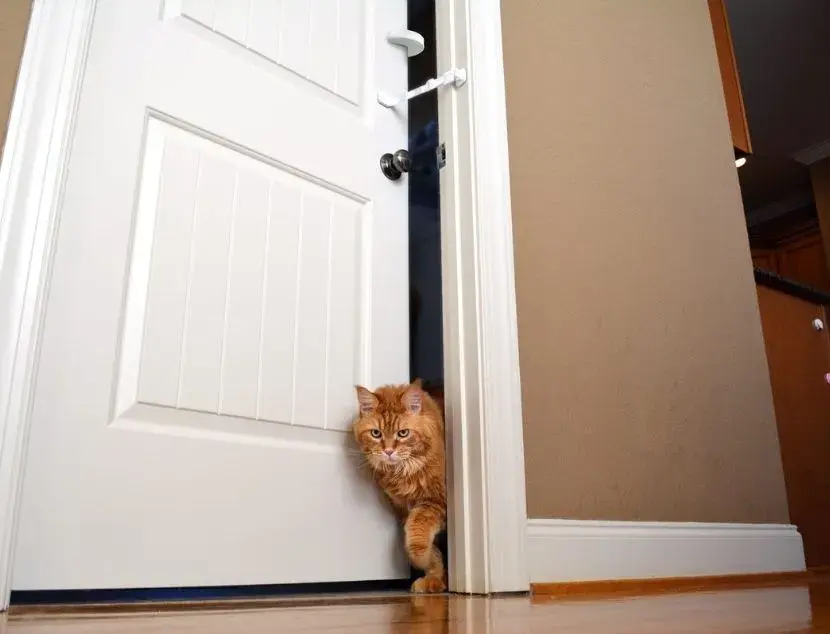
The most reliable fix for most homes is to control the door to the litter box room. Door Buddy holds the door open a cat-sized gap, so your cat comes and goes and it helps keep the dog out. There's no gate to step over, no door left wide open, and no cat meowing to be let in.
-
The Door Buddy Dog Door Strap + Door Stopper Combo goes on with adhesive, with no tools and no holes, and you adjust the gap to fit your cat. The foam Door Stopper keeps the door from closing all the way, so your cat's gap stays open.
-
The Door Buddy Cat Door Prop is the stronger choice for large or persistent dogs. It installs with a screwdriver and the included Torx wrench, reusing your door frame's existing strike-plate screw holes, so there's no cutting and no new holes.
One honest note: set the gap to your cat, then check it against your dog. A very small dog may fit through a cat-sized gap, so a dog close to your cat's size may need one of the other fixes here too.
Here's how one Door Buddy customer put it in a 5-star review:
"This thing seriously changed our lives! Our dog would constantly be getting into the litter box in the closet and we could NOT think of a way to solve the problem."
Door Buddy invented the no-cut cat door alternative in 2014, and we're still the original, assembled in the USA. Over 1 million have been sold, with 50,000+ positive reviews, and every one is backed by our 90-Day Money-Back Guarantee.
7. Consider A Pet Gate, With Trade-Offs
A pet gate across the doorway can work, but it's a lot of stepping over for a room you use often. Many cats won't jump it, older cats may not be able to, and bigger dogs often can.
8. Try A Covered Or Top-Entry Litter Box, With Trade-Offs
A covered or top-entry box makes the litter harder to reach. It isn't dog-proof, though: small dogs can still get their heads in, and some cats, especially older cats, don't like enclosed or top-entry boxes. If you try one, watch that your cat keeps using it. See our guide to the best cat litter box for your home.
What About Small Dogs, Big Dogs, And Puppies?
Small dogs fit through gaps big dogs can't, so they usually need more than one fix. Read keep your small dog out of the litter box. For a large or determined dog, see the big dog litter box fix. For a new puppy, start early with training your puppy to stay out of the litter box.
Have a crawling baby, too? Door Buddy is also designed to keep curious babies and toddlers out of the litter box room. Here's how to keep a baby out of the litter box.
FAQ: Keeping Dogs Out Of The Litter Box
Keep The Litter Box Your Cat's Space
The right fix depends on your dog, your cat, and your home's layout. Most homes do best with a mix: a clean box, a little training, and a door that lets your cat in and helps keep the dog out. Because cats need space.
FIND THE BEST DOOR BUDDY FOR YOUR HOME
Tired of playing door referee? Door Buddy is how the litter box stays cat-only — no cutting, no holes, no new door for your cat to learn. Find the right fit for your dog below and take back control of your space.
Door Buddy is a deterrent, not a childproof barrier. It slows pets and little ones down, but it isn't a substitute for adult supervision. Full safety information is included on our product listings and packaging.
WHAT’S ON THE BLOG
Tips, tricks, and stories for happier, healthier cats and homes. Explore our latest articles below.

Subscribe to be the first to hear about our exclusive offers and latest arrivals.
INFORMATION
COMPANY
GET IN TOUCH
Copyright © 2026 | All rights reserved @Door Buddy

Your Privacy Rights
At The Door Buddy, your privacy matters. You have full control over how your personal data is collected and used.
Opt out of sale & sharing
You have the right to opt out of the sale or sharing of your personal information for targeted advertising.
Right to correct & delete
You may request corrections or deletion of inaccurate personal information we hold about you.
Do Not Sell / Targeted Advertising
We may share browsing data with advertising partners. Toggle off to opt out across all our ad platforms.
Targeted advertising Active
Allows personalised ads based on your activity on The Door Buddy store and across the web.
Meta / Facebook Pixel
Used for retargeting campaigns and conversion tracking via Meta Ads Manager.
Google Ads & remarketing
Enables conversion tracking and personalised ads across Google's network.
Sensitive Personal Information
We do not currently store sensitive personal data such as health or financial information.
Precise location
Used to estimate shipping times and show local delivery options.
Browsing & purchase history
Used to personalise your experience including product recommendations.
Cookie Preferences
Manage which cookies are stored on your device.
Strictly necessary Always on
Required for checkout, cart, login, and security.
Analytics & performance
Help us understand how visitors navigate the store (e.g. Google Analytics).
Marketing & advertising
Used to deliver relevant ads and measure campaign performance.
Functional
Enhance your experience with features like live chat and wishlists.
Access, Correct & Delete Your Data
Submit a request below — we aim to respond within 30 days as required by law.
Request a data report
Receive a full summary of personal data we hold about you.
Correct my data
Ask us to update or fix inaccurate personal information we hold.
Delete my account & data
Request permanent deletion, subject to legal retention requirements.